
Troodos mountains: villages, painted churches and how to get there
6 September 2026
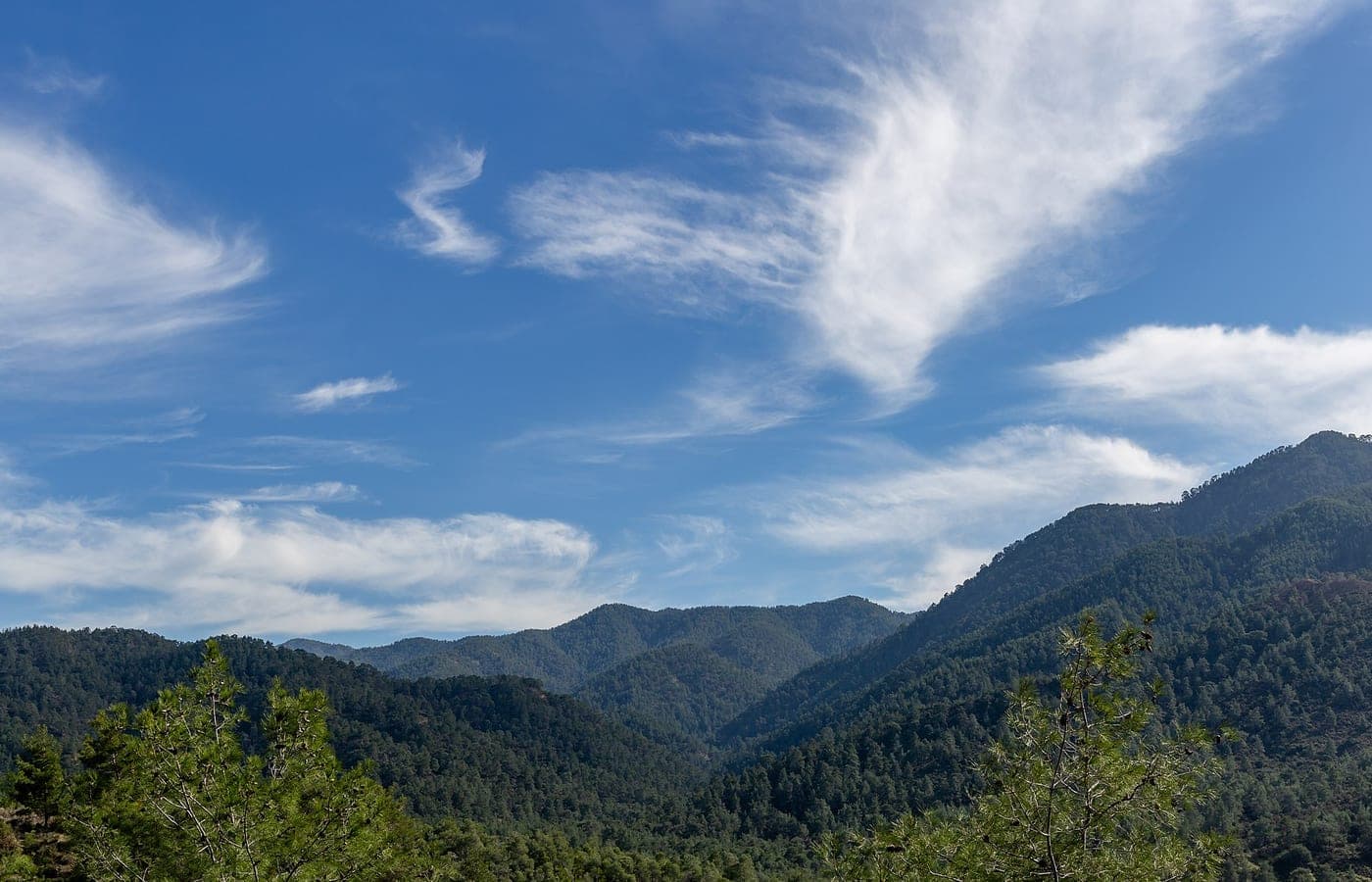
Most visitors to Cyprus never leave the coast, and the Troodos is what they miss: pine forest, stone villages, ten UNESCO-listed churches with medieval frescoes inside, and a mountain high enough to ski on in February. From Limassol it is 42 km and about fifty minutes — €40 in a car with a driver. From Larnaca Airport, 91 km and €85.
Getting to the Troodos
| From | Distance | Time | Sedan | Minivan |
|---|---|---|---|---|
| Limassol | 42 km | 50 min | €45 | €75 |
| Larnaca Airport (LCA) | 91 km | 1 h 15 | €95 | €150 |
| Nicosia | ~70 km | 1 h 10 | — | — |
| Paphos | ~80 km | 1 h 30 | — | — |
This is the one part of Cyprus where public transport effectively does not reach. There are limited services to Platres and a few villages, but no realistic way to string together a day's sightseeing without a car.
That leaves hiring one or booking one with a driver. Hiring is fine if you are comfortable on narrow mountain roads with drops and no barriers — and remember Cyprus drives on the left. Booking a car makes more sense if the point of the day is the wine, or if you would rather look out of the window than at the next hairpin. Limassol is the natural starting point at €40 each way.
Kykkos Monastery
The richest and most famous monastery in Cyprus, founded at the end of the 11th century, high in the western Troodos.
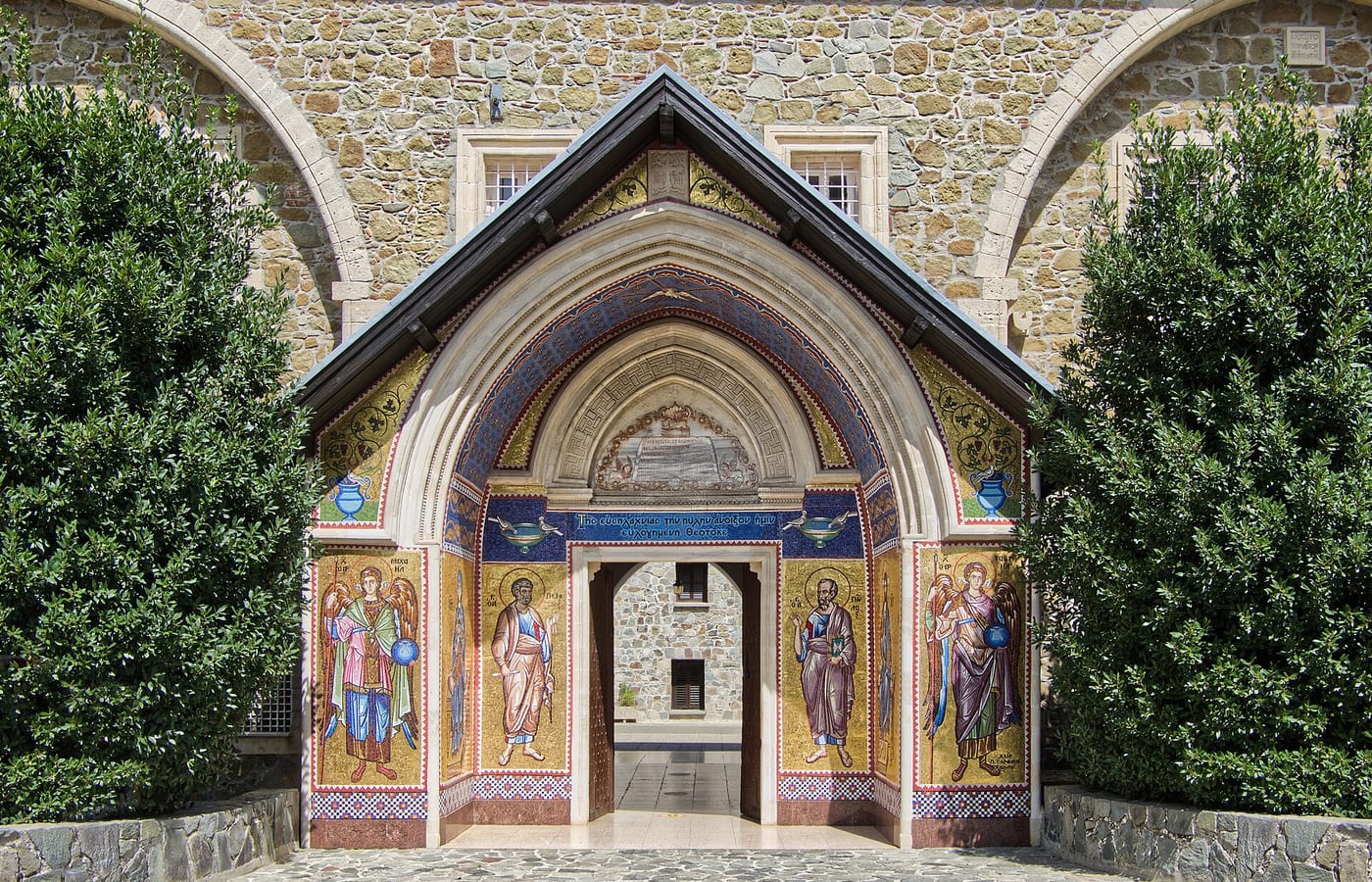
Kykkos. Photo: Berthold Werner, CC BY-SA 4.0
Every surface is covered — gold mosaic, fresco, painted arcade. It holds an icon of the Virgin attributed by tradition to the Evangelist Luke, kept covered, and a museum that is genuinely worth the entry rather than a formality.
It is a long drive to reach: from Limassol allow well over an hour each way, and the last stretch is serious mountain road. Combine it with lunch in a village rather than treating it as a quick stop. Modest dress, and the museum has its own opening hours.
The painted churches
Ten small Byzantine churches in the Troodos are inscribed together on the UNESCO World Heritage list, and they are the single most underrated thing on this island.
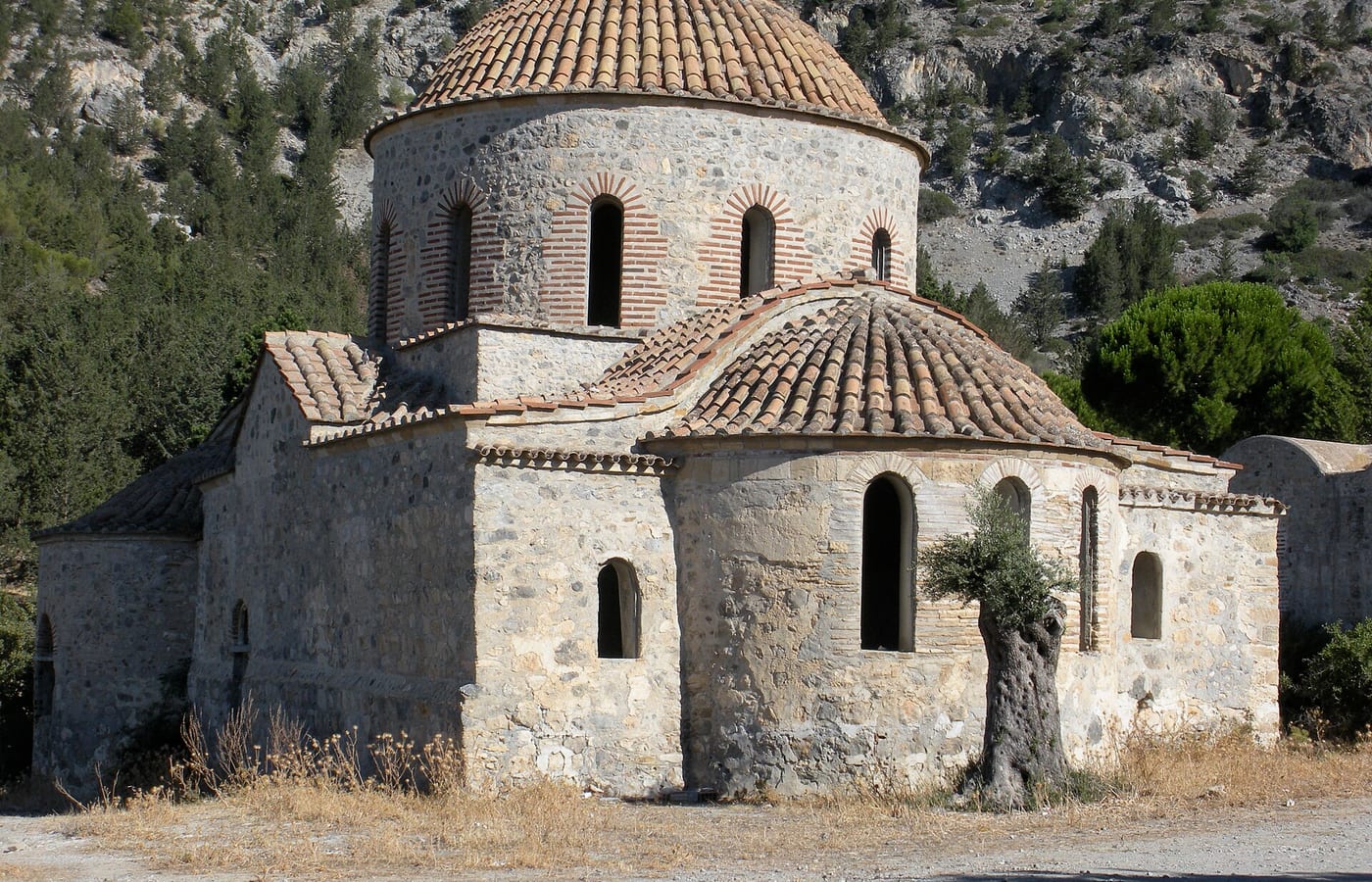
The plain exterior that hides the frescoes. Photo: Zippymarmalade, CC0
From outside most look like barns — steep timber roofs, rough stone, nothing to suggest anything. Inside, every wall is covered in frescoes from the 11th to the 16th century, in colours that have never been restored away.
Practical reality: they are scattered across different valleys, several are kept locked with a key held by someone in the village, and photography is usually forbidden inside. Two or three in a day is realistic. Asinou, Agios Nikolaos tis Stegis and Panagia tou Araka are the usual first choices.
Omodos and the wine villages
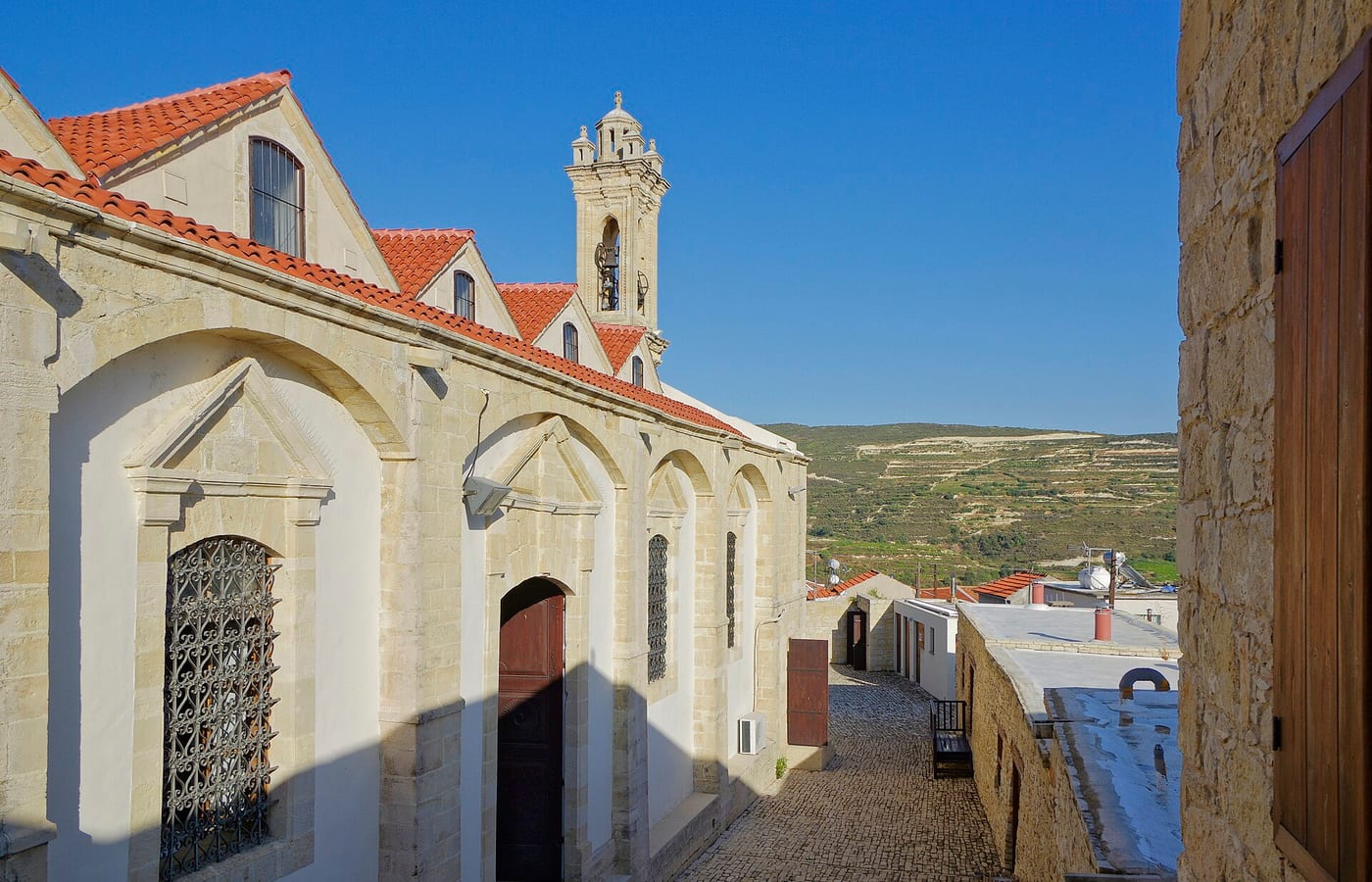
Omodos. Photo: Berthold Werner, CC BY-SA 4.0
Omodos is the village everyone visits and it earns it: a cobbled square, a monastery at one end, and small wineries you can walk between. It gets busy at midday in season; go early.
Around it are the villages that see a fraction of the traffic — Vouni, Lofou, Koilani, Kakopetria and Platres further up. This is Commandaria country, the sweet wine made here since antiquity, and most producers will pour for you without ceremony.
A note if you are driving yourself: tasting wine and mountain roads are a poor combination, and Cyprus enforces its limits. This is the practical argument for a driver more than any comfort one.
Mount Olympus
At 1,952 m, Chionistra — Mount Olympus — is the highest point in Cyprus. In summer it is the one place on the island that is reliably cool, with marked forest trails through the pines. In winter it holds enough snow for a small ski resort, which means you can genuinely ski in the morning and be on a beach by mid-afternoon.
The Artemis and Atalante trails circle the summit and are the best walking here — signposted, not technical, and a completely different Cyprus from the coast.
When to come
- Spring (April–June) — wildflowers, full rivers, comfortable walking. The best season.
- Summer — the escape from the coastal heat; ten degrees cooler and worth a day out of any beach holiday.
- Autumn — the grape harvest, and the villages at their most alive.
- Winter — snow on Olympus, skiing from roughly January to March, and the churches without another visitor in them.
FAQ
How do you get to the Troodos without a car?
With difficulty. There are limited bus services to Platres and some villages, but they will not let you see more than one place in a day. A car with a driver from Limassol is €40 each way and is the practical alternative to hiring.
How long does it take from Limassol to Troodos?
About fifty minutes for 42 km — the distance is short but the road climbs and winds, so it takes longer than the kilometres suggest.
Can you really ski in Cyprus?
Yes, on Mount Olympus, roughly January to March depending on the snow. It is a small operation with a handful of lifts, not an Alpine resort — but it is real, and the coast is an hour and a half away.
Are the painted churches always open?
No. Several are locked and opened by a keyholder who lives in the village — a sign on the door usually says where to find them. Plan two or three rather than a list of ten, and do not count on photographing the frescoes.
Book a car for the day
Fixed prices from Limassol and both airports, with the exact fare for your route: all Cyprus transfers.