
Ayia Napa guide: beaches, the monastery, sea caves and transfers
16 August 2026
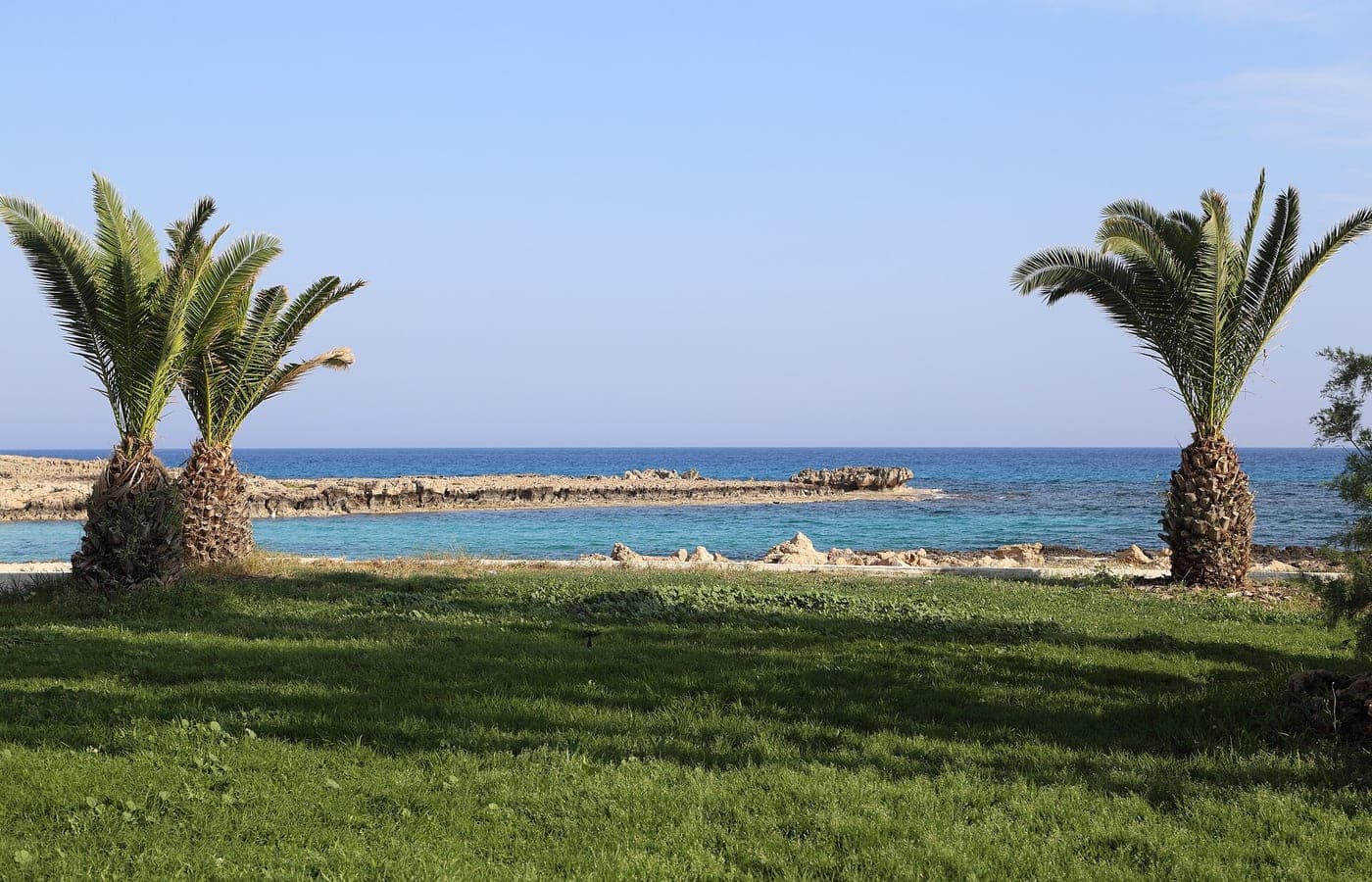
Ayia Napa has two reputations and both are true: a serious party town for a few streets around the square, and one of the best stretches of beach in the Mediterranean everywhere else. From Larnaca Airport it is 55 km and about 40 minutes — €50 in a booked car, €90 for a minivan. Choose your street carefully and you can have either holiday.
Getting to Ayia Napa
| From | Distance | Time | Sedan | Minivan |
|---|---|---|---|---|
| Larnaca Airport (LCA) | 55 km | 40 min | €70 | €115 |
| Paphos Airport (PFO) | 150 km | 1 h 45 | €190 | €300 |
| Protaras | 8 km | 15 min | €30 | €40 |
| Limassol | 127 km | 1 h 30 | €125 | €205 |
Fly into Larnaca. The A3 motorway runs east from the airport almost to the resort, and forty minutes is the real figure — Cypriot motorways do not have congestion in the European sense. From Paphos the same journey is nearly two hours and €170, and you pay that gap on the way home too.
Public buses run the route for a few euro but keep to a timetable that ends in the evening and drop at stops rather than hotels. Fine with a rucksack; hard work with a family's luggage after a four-hour flight. Live fares: Larnaca Airport → Ayia Napa.
Nissi Beach and the rest of the sand
Nissi is the famous one: a shallow bay with a sandbar running out to a small island you can wade to, water so pale it looks tropical. It is also the loudest beach in Cyprus in season, with music from the beach bars from mid-morning. Beautiful in May, June and September; a decision in August.
The alternatives are five minutes away and most visitors never find them:
- Makronissos — a set of three smaller sandy coves west of town, calmer, with an ancient tomb complex cut into the rock behind them.
- Landa — next to Nissi, same sand, a fraction of the noise.
- Konnos, towards Protaras — a pine-backed horseshoe bay that feels like a different island.
The monastery
In the middle of the town square, surrounded by everything the town is famous for, sits a 16th-century Venetian-era monastery built around a cave church and a courtyard with a sycamore said to be six hundred years old.
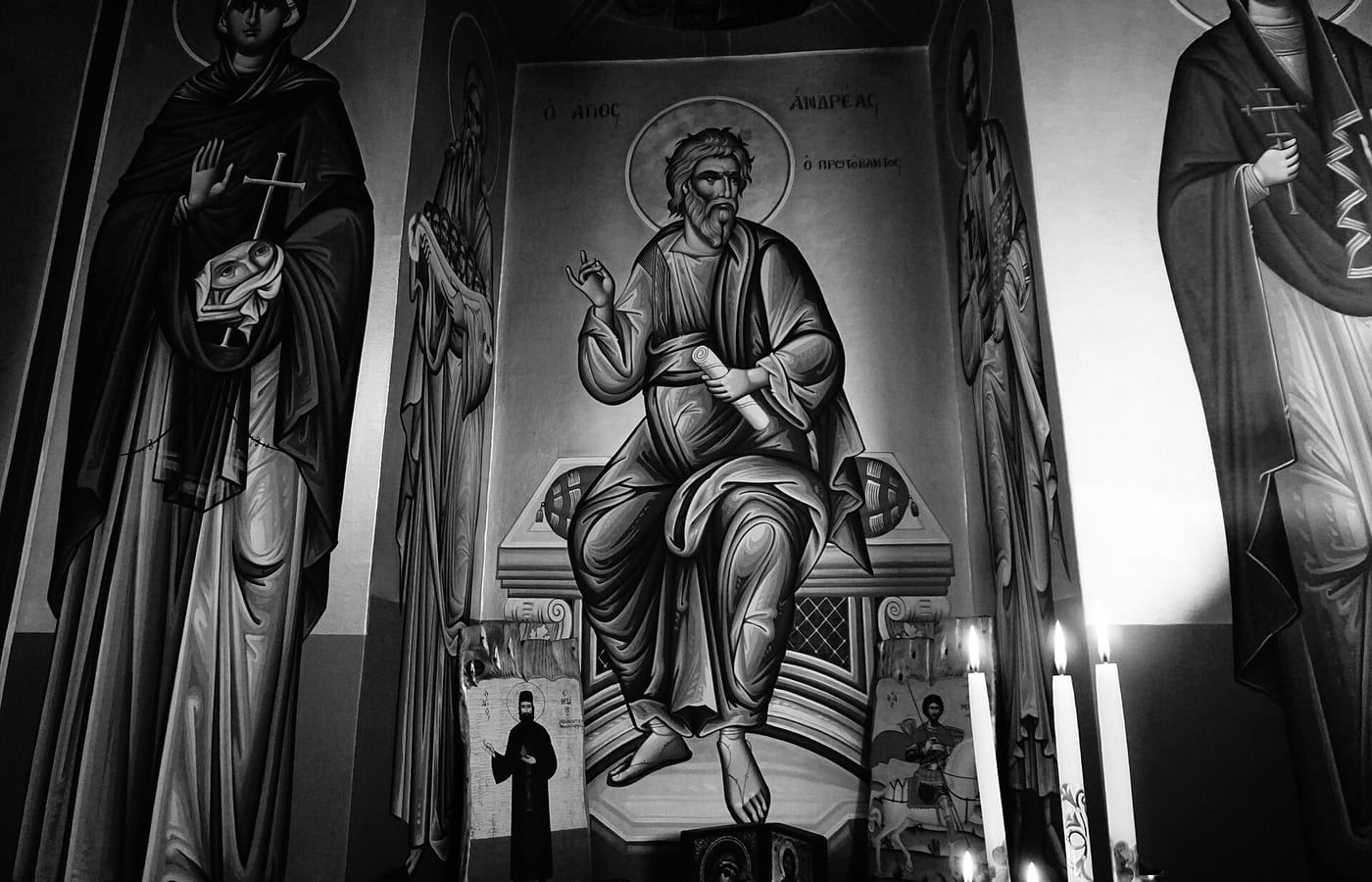
Ayia Napa monastery. Photo: Andrew Milligan sumo, CC BY 2.0
It takes twenty minutes and it is free, and the contrast is the point: cool stone and silence with the bars fifty metres away. Go in the morning. Shoulders and knees covered.
The sea caves
West of town the coast turns to low white cliffs riddled with caves and arches, carved out by the sea.
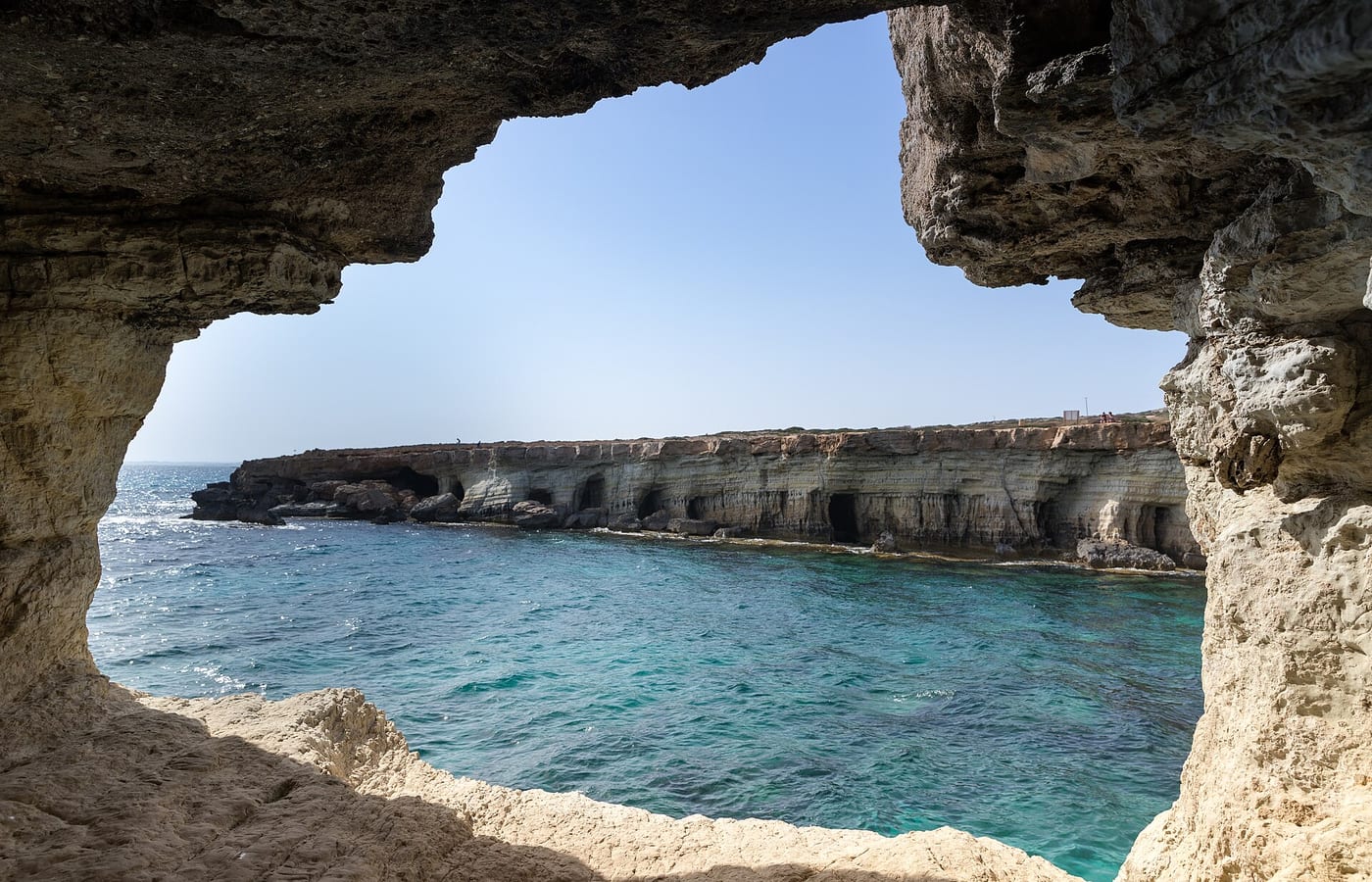
The sea caves west of Ayia Napa. Photo: dronepicr, CC BY 2.0
You can drive to the top and look down, and most people do. The better version is from the water — the boat trips that leave the harbour go into the caves properly and swim in them, which you cannot do from the cliff. Either way the rock is sharp and unfenced, so keep children close to you at the edge.
Cape Greco and the coastal path
The headland east of town is a national forest park — the rock arch at Kamara tou Koraka, the viewpoints, the clearest water on the coast, and a footpath that runs all the way to Protaras. No beach, no shade, and worth an early start. It is the single best free thing to do in the area.
What else
- Ayia Napa Marina, the newer development on the west side, for restaurants without the strip.
- Thalassa Museum in the centre — the sea history of Cyprus, and a reliable answer to a hot afternoon.
- WaterWorld, a large Greek-mythology-themed waterpark, for a day with children.
- Protaras, eight kilometres away, when you want the quiet version of the same coast.
Getting around
Everything in town is walkable. Local buses connect Ayia Napa with Protaras, Paralimni and the beaches frequently in season, and there is a road-train along the front.
Where a car helps: the airport, evening returns after the buses stop, and day trips west. On the eight-kilometre hop to Protaras a local metered taxi will often beat our €30 minimum — that is worth saying plainly. Fixed pricing earns its keep on the long runs and at hours when nothing else is running.
When to come
- May–June — the sea is warm from late May, everything is open, the beaches are not yet full.
- July–August — peak season in every sense. Book early, plan beach time around the middle of the day.
- September — the best single month: warmest water, thinner crowds, still fully open.
- October–April — the resort winds down and much of it closes. Cape Greco and the coastal path are excellent in winter.
FAQ
How long does it take from Larnaca Airport to Ayia Napa?
About 40 minutes for 55 km, nearly all of it on the A3 motorway. Add five to ten minutes inside the resort on summer evenings.
How much is a taxi from Larnaca Airport to Ayia Napa?
€50 for a sedan and €90 for a minivan when booked in advance, fixed whatever the hour. A metered taxi depends on the time of day and the evening tariff band is higher.
Is Ayia Napa only for young people?
No — that reputation belongs to a few streets around the square. Nissi, Makronissos and the Cape Greco side are ordinary beach and walking country, and the monastery sits in the middle of it all. Families usually stay towards Makronissos or in neighbouring Protaras.
Can you visit the sea caves without a boat?
You can drive to the clifftop and look down into them, but you cannot get inside without a boat. The trips from the harbour are the way to see them properly.
Book the transfer
Fixed fare, flight tracking, 60 minutes of free waiting: Larnaca Airport → Ayia Napa.